by James Horrox
Towards the end of the 1970s, against the backdrop of the declining relevance of the collectivities that had shaped earlier generations’ conception of communal ties (class, nation, religion, and so on), Michel Maffesoli began using the terminology of ‘tribalism’ to describe what he saw emerging in their place. A new phase in the life of Western societies was underway, Maffesoli argued, the defining feature of which was the coalescence of a multiplicity of more fluid, nebulous communities, bound together primarily by shared emotion, feelings, lifestyles, passions and tastes. These social formations, whose existence, Maffesoli contends, refutes the prevailing belief in the rise of individualism, are symptomatic of a larger paradigm shift – from modernity to postmodernity – that is witnessing the collapse of the intellectual, social and political models associated with the modern era and the emergence of new ways of thinking and being.
In France, Maffesoli has long enjoyed a degree of notoriety as something of a dissident public intellectual, but it wasn’t until the mid-1990s, with the publication of the SAGE English edition of his magnum opus The Time of the Tribes (originally published in French in 1988), that he began to make an impact in Anglophone academia. With the majority of his sizable back catalogue still yet to be translated, The Time of the Tribes remains an essential introduction to the main themes in Maffesoli’s work – themes that are arguably more relevant today than at any point in the three decades since the book first appeared. Continue reading
 The following interview first appeared in French in issue 42 of the journal Rebellion.
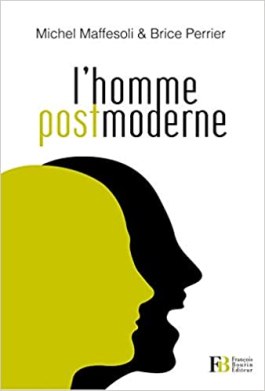 For forty years we have spoken of ‘postmodernity’. But who has really grasped the implications this holds for us as individuals? Who has equated it with the emergence of a fundamentally different human being? Relativising reason according to feeling and emotion, relinquishing his status as ‘individual’ to make way for a pluralistic nature, neglecting his civic duty to devote more time to his tribe, the postmodern man abandons almost everything his predecessor held dear.
 Secessio